
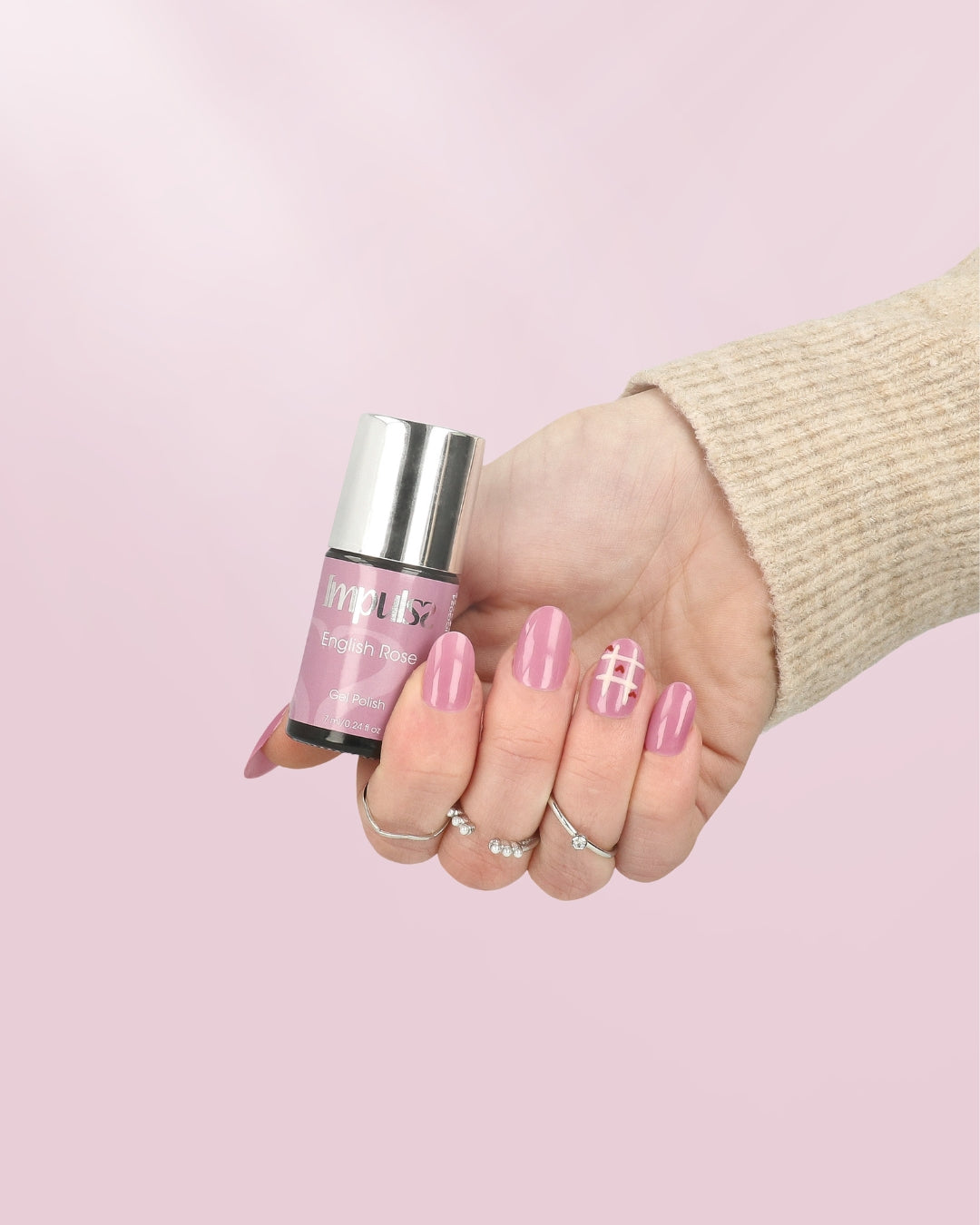
Gel polish: it lasts for weeks, looks beautiful, and you no longer have to touch up your nails every few days. However, you increasingly hear people say that gel polish is bad for your nails. But is that really true?
In this blog, we unravel the facts and myths. We explain when gel polish can be harmful, how to use it safely, and what you need to know about allergies and product choice.
Gel polish itself is not bad, improper use is
Let's start with the most important point: gel polish is not harmful to your nails, as long as you apply and remove it correctly. Much damage actually occurs due to mistakes in application:
-
Peeling or pulling off the polish
-
Filing too aggressively on the nail plate
-
Gel polish that comes into contact with the skin or cuticles
-
Using removers or lamps of poor quality
When you use gel polish wisely, your natural nail remains healthy and strong.
What happens if you pull off gel polish?
Pulling off gel polish may be tempting when air gets underneath, but it is disastrous for your nails. You not only pull off the polish but also thin layers of your own nail. The result: thin, brittle, and sensitive nails that take time to recover.
Tip: Always remove gel polish with a good soak-off remover or a peel base, and be patient during the process.
Safe removal of gel polish: here's how to do it
-
First, lightly file the topcoat so that the remover can work effectively.
-
Use enough remover and press the impregnated wipe firmly onto the nail with foil.
-
Let it sit for at least 15 minutes. Then carefully remove the loosened polish.
-
Never use force or sharp tools like a metal cuticle pusher to remove stubborn residues.
Alternative: use a Peel Base, which allows you to remove gel polish like a sticker – without acetone!
Allergy to gel polish: what's the deal?
In some cases, people can develop an allergy to substances in gel polish, such as HEMA or Di-HEMA acrylates. These substances are considered particularly risky if they regularly come into contact with the skin.
Here's how to prevent irritation or allergy:
-
Choose gel polish that is free from HEMA or other risky acrylates.
-
Avoid skin contact while applying. If you accidentally touch your skin, remove it immediately with a corrector pen or a wipe with cleaner.
-
Use a LED lamp from the same brand as your gel polish for proper and safe curing.
Did you know that many allergies arise from using low-quality products from countries outside the EU, where there are no strict regulations? Always buy products that comply with European cosmetic guidelines.
Gel polish and UV light: a reason for concern?
In some media, you read that UV lamps could cause damage to your skin or cells. In practice, this risk is minimal, especially if you:
-
Use a reliable LED or UV lamp from a recognized brand
-
Follow the recommended curing time
-
Work carefully, so your skin is not unnecessarily exposed
Want to be extra careful? Then apply SPF to your hands or wear UV-protective gloves during curing.
Thin nails after gel polish? It's often due to adjustment
After removing gel polish, your nails may feel thinner. That doesn't mean they are damaged – you simply miss the strengthening layer you were used to. Give your nails some rest, use a nourishing nail strengthener or nail serum, and within a few days, they will feel stronger again.
Conclusion: is gel polish bad for your nails?
No, gel polish is not bad for your nails, as long as you use it correctly and responsibly. Most damage occurs due to improper use or the application of low-quality products.
✅ Choose gel polish without HEMA
✅ Avoid contact with the skin and cuticles
✅ Remove gel polish in a gentle, controlled manner
✅ Use reliable products that comply with European guidelines
At Impulss, safety and care come first. We only offer products that are suitable for home use, free from harmful substances, and tested for quality. This way, you can enjoy beautiful, healthy nails without worry.
